
Should you renovate your pool or build a new one. Here's how to actually tell.
Atlantis renovates existing pools. It is real construction, not a quick refresh, and it is not cheap. Sometimes the more honest recommendation is to tear out what's there and build new instead. The right call depends on the shell, the layout, the equipment, and what your family actually wants from the space now.
Kelly Jennings, Designer & Project Manager, Atlantis Pools & Spas. Genesis School Associate. Certified Pool Builder. Multiple PHTA Design Awards. 22+ years.
Chadwell · Roswell
Most homeowners who call about a renovation have already decided what they want the answer to be. They want to hear that the existing pool can be saved, because saving it feels smaller, faster, and less disruptive than starting over. Sometimes that is exactly right. Sometimes it isn't, and the honest thing to do is say so before a contract gets signed, not after a renovation runs into a shell that was never going to hold what the family wanted from it.
Why is it hard to get a straight answer on renovating vs. rebuilding.
Builders who only renovate have a reason to tell you your pool can be saved. Builders who only build new have a reason to tell you it can't. Neither incentive has anything to do with what your specific pool actually needs; it has to do with which answer keeps that business's phone ringing. Atlantis builds new pools and renovates existing ones, both as real, priced, scheduled scope, so there is no commercial reason to steer the recommendation either direction. The answer is whatever the site actually shows.
What actually determines whether to renovate or rebuild.
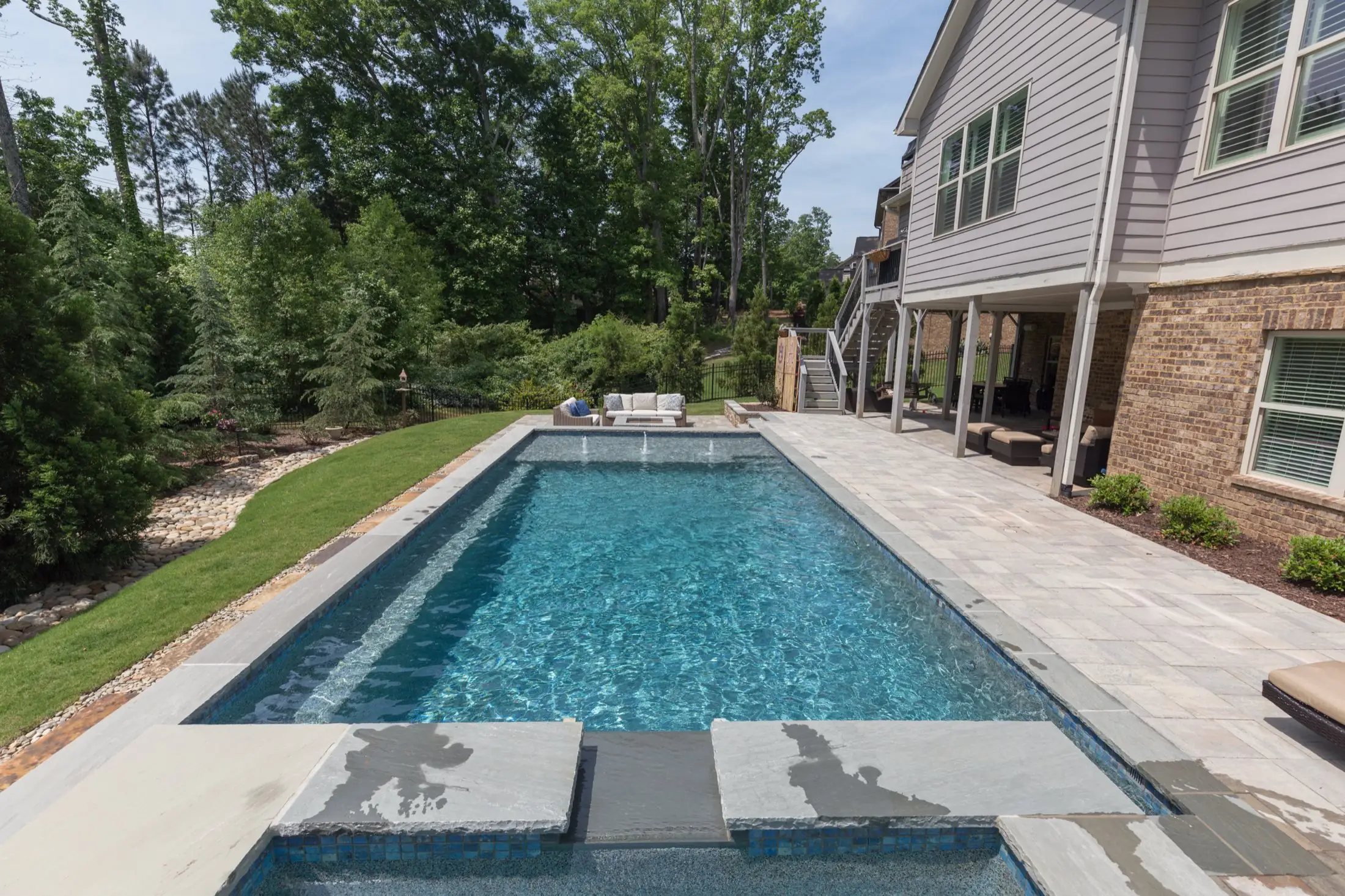
Four things decide it: the condition of the shell itself, whether the footprint and layout still fit how the family wants to live now, the age and condition of the equipment, and whether the features the homeowner wants can physically exist on the current shell. Cosmetic problems usually mean renovate. Structural or footprint problems usually mean rebuild.
Is the shell itself sound.
The shotcrete structure underneath the finish is the first thing to assess, and it is the single biggest factor in this decision. A sound shell with a worn finish is a renovation. A shell with real structural or drainage problems built into the original construction is usually the honest argument for starting over.
A pool's shell is not something a homeowner can assess by looking at the water. Cracking, movement, or a drainage problem that was never solved correctly the first time are underneath the finish, not visible from the deck. This is exactly the kind of assessment that has to happen in person, which is also why no honest answer to this question can be given over the phone.
Does the footprint still fit how the family actually lives.
A pool built fifteen or twenty years ago was designed for the family that lived there then. If the current footprint, shape, or location no longer fits how the family actually wants to use the backyard now, renovating within that old footprint just repeats the same limitation in a fresher finish.
Families change. A pool built for toddlers doesn't necessarily work for teenagers who want a bigger sun shelf, or for parents who now want an outdoor kitchen and fire feature where the old equipment pad sits. Sometimes the honest constraint isn't the shell at all, it's the layout.
Is the equipment past the point of a simple swap.
Aging pumps, filtration, heaters, and automation can usually be upgraded inside an existing shell without triggering a full rebuild, and equipment age alone is rarely the deciding factor. A pool with a sound shell and a good footprint, but pumps and a heater at the end of their life, is often a straightforward case for renovation; it becomes a rebuild factor only when the plumbing runs beneath a shell that also has structural or layout problems worth solving at the same time.
Can the shell actually support what the family wants now.
Some features, an integrated spa, a vanishing edge, a larger footprint, simply cannot be added to an existing shell without rebuilding it. A vanishing edge is the clearest case: it changes the engineering and the water management of a pool entirely and cannot be retrofitted onto a shell that wasn't built for it. If what the family wants now requires engineering the old shell was never designed for, renovation isn't an option regardless of how sound that shell otherwise is.
When does it make sense to renovate instead of rebuild.
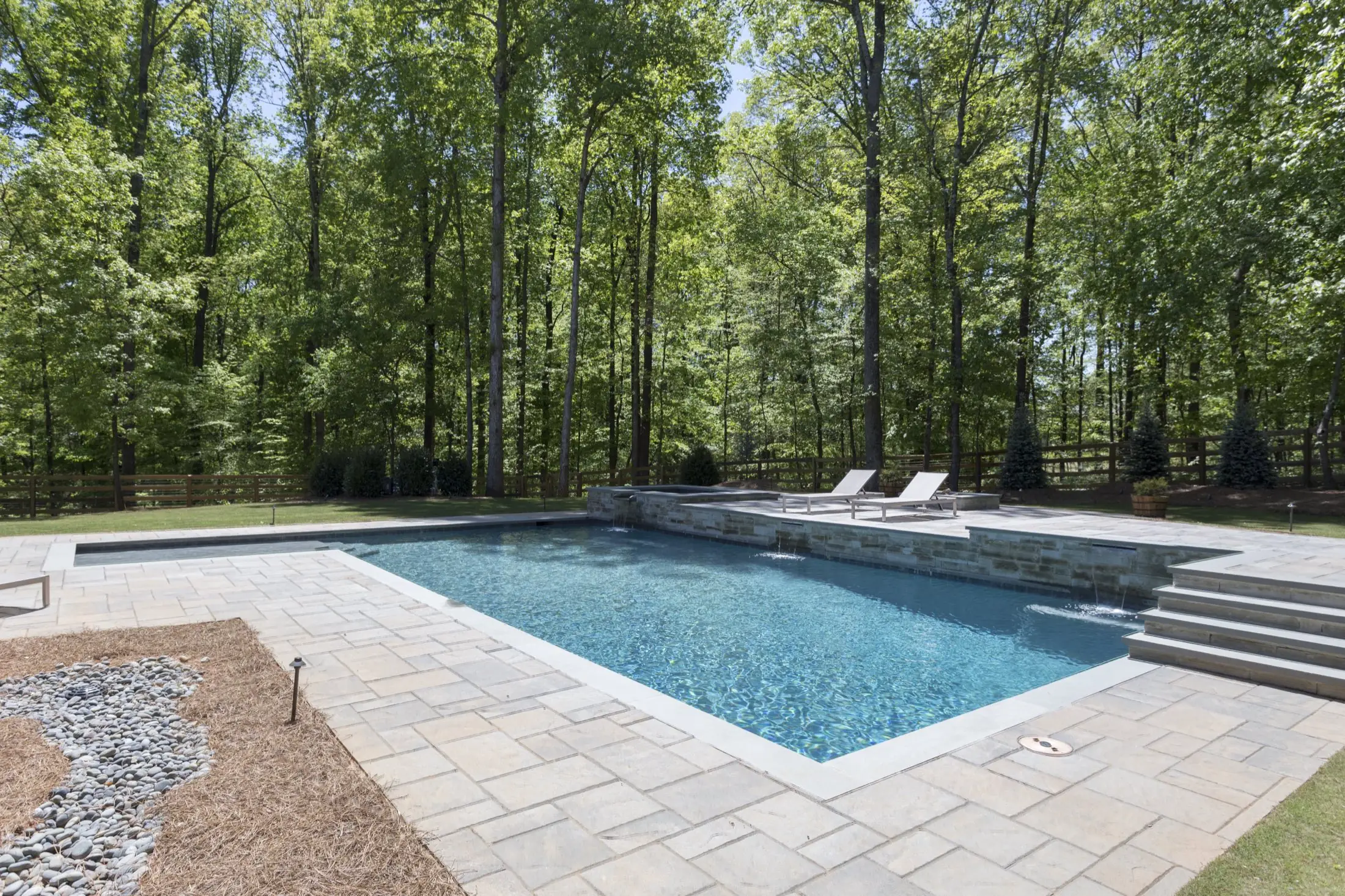
Renovation is the right call when the shell and footprint are sound and the work needed is cosmetic or mechanical: a new interior finish, rebuilt coping and decking, upgraded equipment and automation, or a corrected drainage issue that doesn't touch the structure itself. This covers a real share of the calls Atlantis gets.
A worn plaster or pebble finish, dated coping, decking that has settled or cracked, equipment that needs replacing, none of that requires tearing anything out. These are the calls where renovation is not a compromise, it's simply the correct scope for the problem.
Adding a feature to an otherwise sound shell, a new water feature, updated lighting, automation, can also fall inside renovation scope, as long as the shell itself can physically support it. The distinction is never "renovation versus rebuild" as a matter of preference. It's whether the underlying structure can carry what's being asked of it.
When is tearing out and starting over actually the better answer.
Tear-out and new build is the honest answer when the shell has a real structural or drainage problem, the footprint no longer fits the family's actual life, or the family wants a feature the old shell can't support. It is a bigger project than most homeowners call about, and it is the harder thing to tell someone who called expecting a renovation quote, but sometimes the pool in the ground is not worth saving, and the right move is to take it out and build the one that actually fits the family living there now.
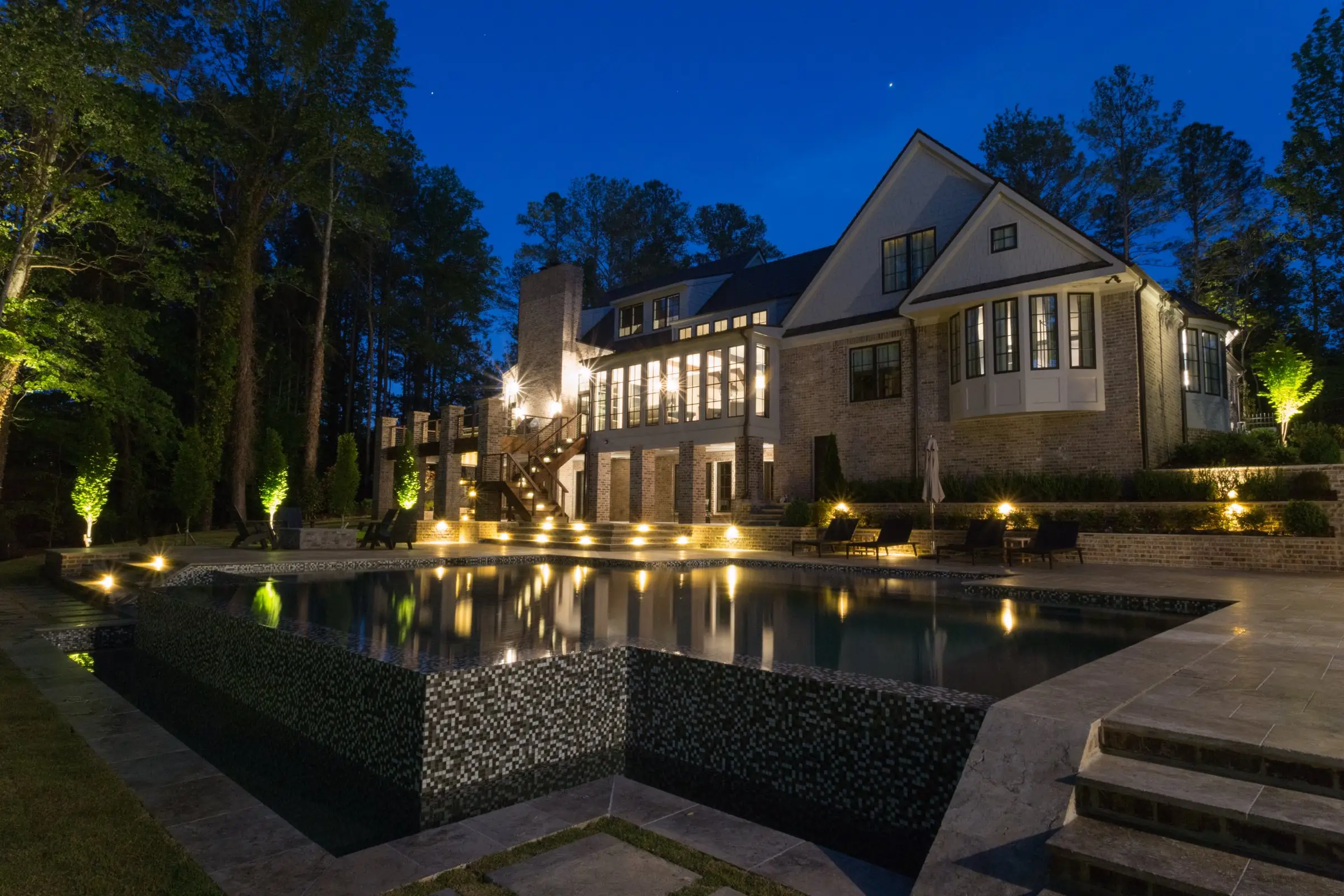
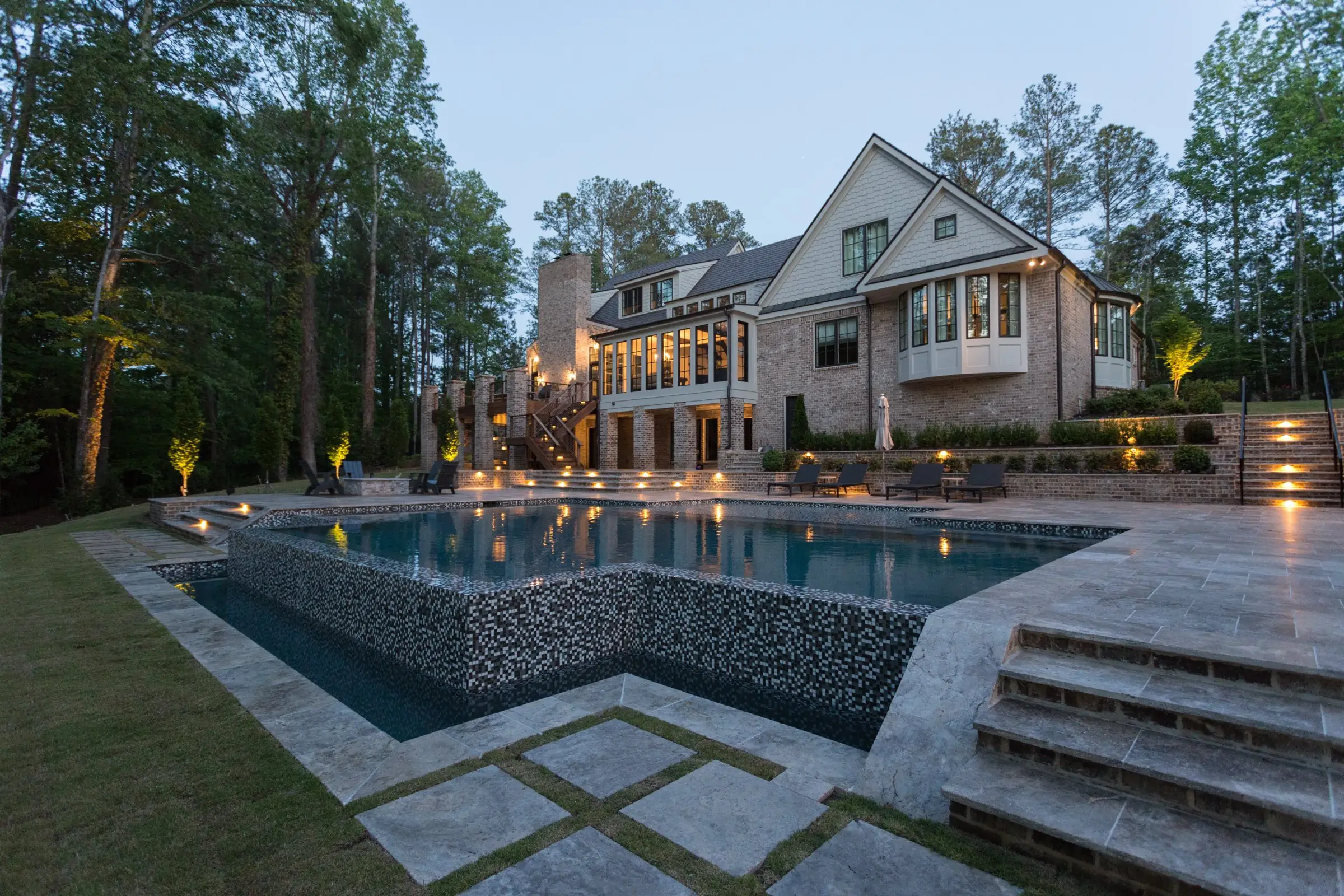
The clearest example of this in Atlantis's own work is the Chadwell project in Roswell. The Chadwells called Atlantis mid-build, already unhappy with another contractor's work in progress. The plan on the ground was small and freeform. Rather than finishing someone else's half-built pool, Atlantis tore it out and started over, turning that small freeform plan into an elaborate linear modern pool with a vanishing edge and a pool house. The relationship has continued for more than ten years since.
Chadwell is a mid-build rescue, not a finish-level renovation of an aging pool. Faced with a half-finished pool that wasn't going to become what the Chadwells actually wanted, the honest call was to stop, tear out, and rebuild, even though that was a bigger undertaking than picking up where the other contractor left off. The same logic applies to an aging pool with a compromised shell or the wrong footprint. Sometimes finishing or patching what's there costs more, in money and in the end result, than starting clean.
How does Atlantis decide which path is right for your pool.
The renovate-or-rebuild call gets made in person, never over the phone: a shell that looks fine in a listing photo can have a drainage problem built into the original construction, and a footprint that looks generous on paper can feel wrong the moment a family describes how they actually want to use the backyard. Kelly runs a free design site visit, an honest look rather than a sales pitch dressed as an inspection, to see the actual shell, layout, and equipment against what the family wants now. No written assessment is handed over at that visit; the custom design, renovation or new build, comes at the follow-up design meeting seven to ten days later.
If the honest recommendation is renovation, that scope gets designed and priced like the real project it is. If the honest recommendation is a tear-out and new build, that gets designed the same way any new Atlantis project does, as a full backyard environment, not just a replacement pool. Either way, construction on new work runs 12 to 14 weeks. What actually costs what depends on scope, and that conversation belongs on the cost-drivers guide, not here.
Questions homeowners ask about renovating vs. building new.
Is it cheaper to renovate my pool than to build a new one?
Not necessarily. Depending on the condition of the shell and what needs correcting, a serious renovation can approach the cost of new construction. The honest comparison depends entirely on what's actually wrong with the existing pool, which is why it gets assessed on site rather than estimated over the phone. See the cost-drivers guide for what actually moves the number.
How do I know if my pool is worth renovating?
It comes down to the shell, the footprint, and what you want from the space now. A sound structure with a worn finish or aging equipment is usually worth renovating. A shell with a real structural or drainage problem, or a footprint that no longer fits how the family lives, is usually the honest argument for starting over.
What are the signs my pool should be replaced instead of repaired?
Cracking, a drainage problem built into the original construction, or a footprint too small or wrong for how the family actually uses the space are the clearest signs. None of these are things a homeowner can diagnose by looking at the water. They surface during an on-site assessment of the shell itself.
Can you renovate a pool another builder originally built?
Yes. The Chadwell project in Roswell is a real example, though it's a mid-build takeover rather than a typical aging-pool renovation. Atlantis was called in while the pool was still under construction with another contractor, and the honest recommendation was to tear it out and start over rather than finish it as planned.
Can I add a spa, outdoor kitchen, or fire feature during a renovation?
Often, yes, if the existing shell and site can support it. Adding features to a sound shell is real renovation scope. If the feature requires structural changes the old shell can't accommodate, such as an integrated spa or a vanishing edge, that usually points toward a new build instead.
Will I get a price before I decide between renovating and rebuilding?
Not at the first visit. Kelly's free site visit is where the shell, layout, and equipment get assessed in person. The actual design and recommendation, renovation or new build, come at the follow-up design meeting seven to ten days later, once there's been time to design the right answer rather than estimate one on the spot.
The only way to answer this honestly is to walk the actual pool.
That conversation starts with a free site visit, Kelly in person, looking at your shell, your layout, and what your family actually wants from the space now.