
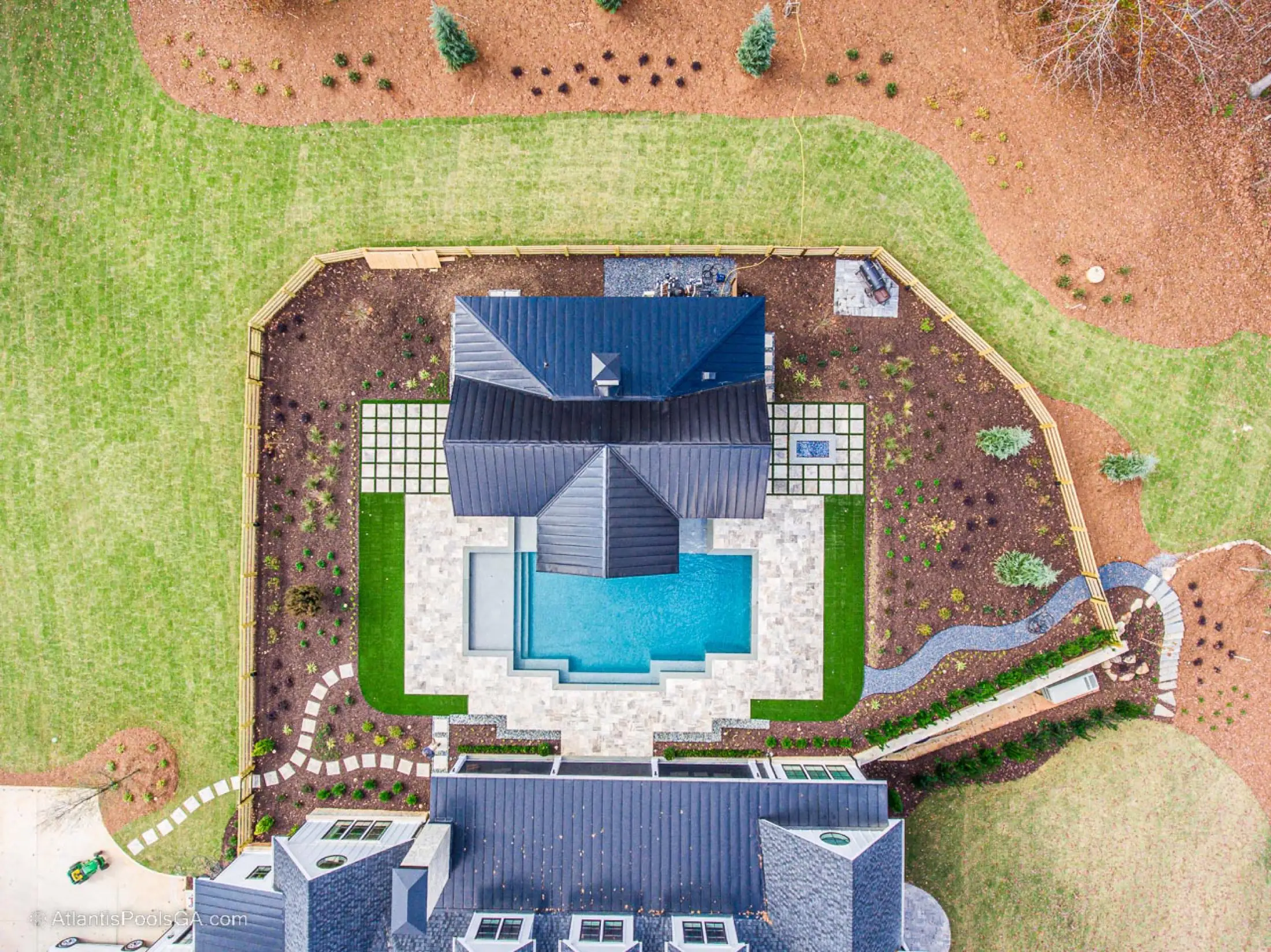
The buyer's guide. Everything to know before you build a custom pool in North Atlanta.
Buying a custom pool is a months-long process, not a single decision. It moves through design, permitting, and construction long before anyone breaks ground, and most of what goes wrong traces back to something a buyer never asked about upfront. This guide covers the real timeline, the real cost drivers, and every question worth asking before you sign.
Kelly Jennings, Designer & Project Manager, Atlantis Pools & Spas. Genesis School Associate. Certified Pool Builder. Multiple PHTA Design Awards. 22+ years.
Bolduc
Most builder websites show you finished pools and ask you to imagine the rest. This page does the opposite. It walks through what actually happens between the day you start looking and the day you swim: how the process really works, what actually moves the price, how to tell a builder who has done this for decades from one who is learning on your backyard, and what other buyers wish they had known sooner.
What does buying a custom pool actually involve.
A custom pool build moves through four real phases: design (a site visit that reads the property for elevation, soil, and setbacks, then a custom plan built around what that lot allows, not a template), a contract with real pricing, permitting and any HOA review (often running in parallel), and construction, which runs through its own set order: excavation, structure, the shell, the finish, and the outdoor living around it. Most homeowners underestimate everything before construction starts, and that earlier stretch, done right, is what makes the build itself go smoothly. A builder who rushes the design or skips a proper site read is the same builder who hands you a change order in week six.
Why doesn't any builder just tell you what a pool costs.
No two backyards start from the same site or end at the same design. What drives the number is the site itself, the structure and finish you choose, how much outdoor living you build around the water, and whether one team designs the whole backyard together or a pool gets built with pieces added later. Georgia red clay behaves differently lot to lot, a slope changes how much excavation and retaining wall work a project needs, and a pool built alongside a spa, a kitchen, and stonework is a different scope than one built alone. A real number only exists after a site visit, never a phone estimate; a builder who quotes one before seeing your property is guessing, or leaving room to raise it later.
The full breakdown of what moves the price and why sits on its own page: read the complete cost breakdown at /guide/cost-drivers.
What you should expect from any builder on this topic: a plain explanation of what drives their pricing, before you ask twice, and a real number only after a site visit. If a builder hands you a firm number before seeing your property, that is worth asking about directly.

How long does it actually take to build a custom pool.
Design takes seven to ten days after the site visit, after which you meet again to see it and request changes. Once a design and a contract are settled, permitting and any HOA review typically run in parallel rather than back to back, which is one of the biggest levers for staying on schedule. Construction itself runs twelve to fourteen weeks, moving through excavation, structural steel, plumbing and electrical, the shotcrete shell, the interior finish, and the decking, stonework, and outdoor living around it. Add design, contract, and approval time ahead of that window, and most projects run several months from first call to first swim.
Season planning. If you want to swim by a specific summer, work backward from that date. Between design, any HOA and permitting timeline, and twelve to fourteen weeks of construction, most homeowners who want to swim by early summer need to start the conversation the fall or winter before. Starting later is not disqualifying, but it does mean accepting a later finish date rather than compressing the steps that protect the result.
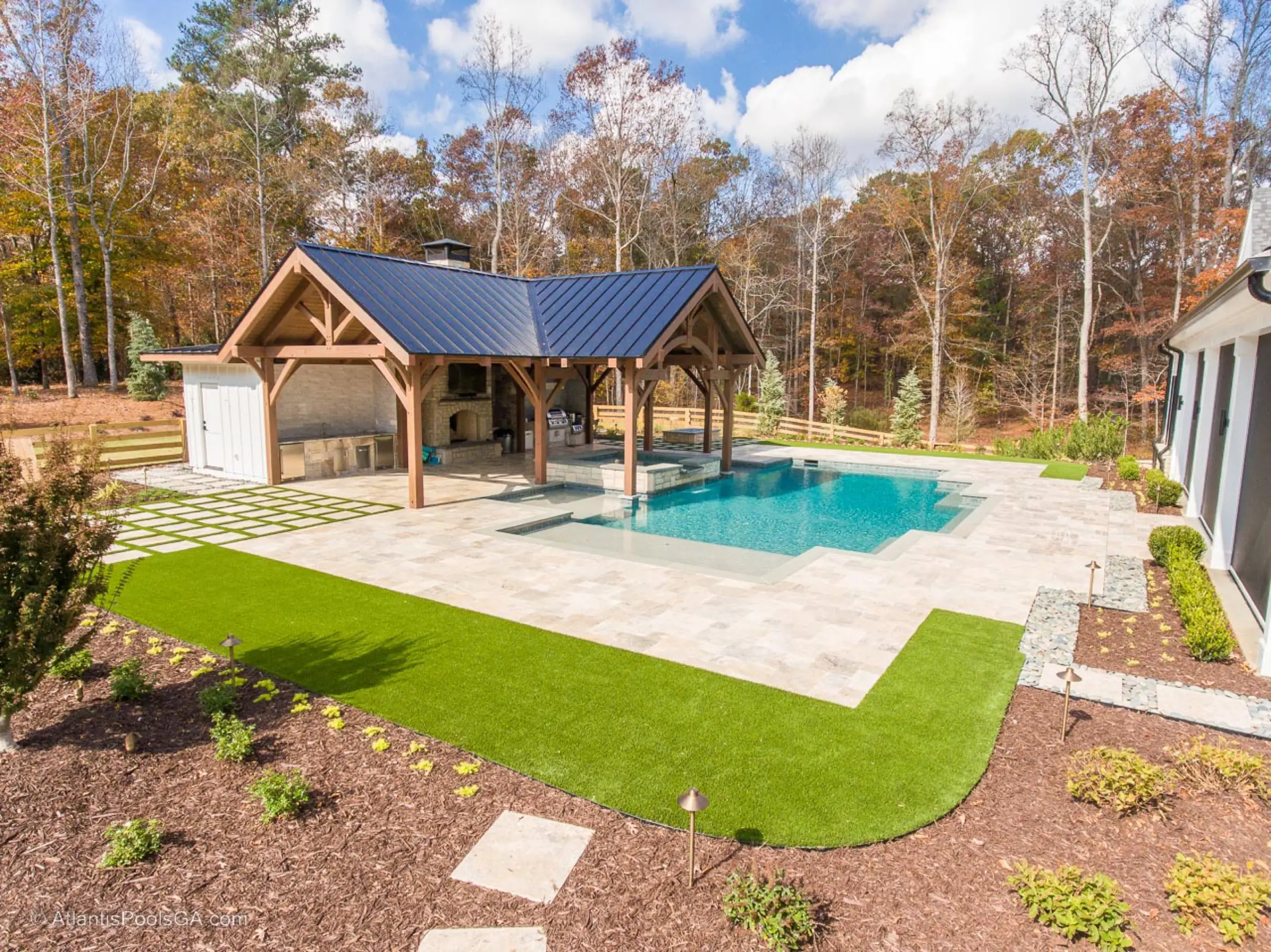
Bolduc
What should you ask any builder before you sign anything.
Ask how they read a site before pricing it, who actually shows up to design and build your project, whether they can show a reference list of every pool they have built, what their real construction window is, and what happens if the site turns out harder than expected. A builder's answers to these questions tell you more than any portfolio.
Use this list with anyone on your shortlist, Atlantis included. A confident, specific answer to each one is a good sign. A vague answer, or a question that gets waved off, is worth noting.
1. How do you evaluate the site before you price the project? Ask what gets checked (soil, grade, drainage, setbacks, trees) and when. A builder who prices from a phone call, before seeing the property, is guessing.
2. Who actually designs my project, and who is on site during construction? Get names, not job titles. Ask if the people you meet at the first conversation are the same people who show up for the next six months.
3. Can I see a reference list of every pool you've built, not just the ones on your website? A builder proud of its work will hand this over without hesitation. A curated portfolio of ten photos is not the same thing.
4. What is your real construction timeline, start to finish, and what could change it? Ask for a specific window, not "it depends." A builder with a real process can tell you the typical range and name the two or three things most likely to move it.
5. What happens if the site turns out harder than expected, clay, drainage, a tree I want to keep? This is the question that separates a builder who plans for site risk from one who treats it as a surprise. Ask for a real example of a project where the site got harder than expected and how it was handled.
6. What is actually covered by warranty, and for how long? Get the specifics: structure, finish, equipment, lights, workmanship, each with its own term. A builder who is vague here is a builder who has not thought about what happens after the check clears.
7. What is the payment schedule, and does it match the work completed? A payment schedule tied to real construction milestones is normal. A schedule that front-loads most of the money before meaningful work happens is worth asking about directly.
8. Do you build the whole backyard, or just the pool? If you want a kitchen, fire feature, or stonework as part of the same project, ask whether one team designs all of it together or whether you will be coordinating separate contractors.
9. How do I verify your license and any credentials you list? Any legitimate builder should be able to point you to their license number and, where they claim additional training, a public registry where you can check it yourself. See the next section for exactly how.
Bolduc
How do you actually verify what a builder tells you.
Four things are worth checking independently, not taking a builder's word for any of them.
License. Every legitimate pool builder in Georgia holds a state contractor's license. Ask for the license number and look it up yourself. It confirms the builder is legally permitted to build, pull permits, and carry the required insurance. It does not, on its own, tell you anything about design skill or engineering judgment.
Design credentials. A license is the legal floor, not a design credential. Genesis School of Design is an advanced pool design and construction education program that goes beyond the license requirement. If a builder claims Genesis training or a specific program level, the public registry at genesis.phta.org is where that claim gets checked, not a builder's own website. Read the full breakdown of what Genesis training covers and how to check it at /studio/credentials.
Reviews, across more than one platform. A builder with strong reviews on only one site is easier to curate than one with a consistent record across several independent platforms. Look at the number of reviews, not just the average, and read a handful of the specific, detailed ones rather than the short five-star lines.
Real projects, in person. Photos can flatter any pool. Ask to see finished projects in person, ideally ones built more than a few years ago, so you can judge how the structure, the finish, and the equipment have actually held up, not just how they looked the week they were finished. A builder who offers this without being asked twice is telling you something. A builder who cannot produce a single project to visit is telling you something else.

What are the warning signs when you're choosing a pool builder.
Some warning signs are easy to miss individually and obvious once you see them stacked together. Any one of them alone is worth a direct question. More than one together is worth walking away from.
A number before a site visit. No one can price a custom pool accurately without seeing the property. A firm quote on the first call is either a guess that will grow later, or a low anchor meant to get you to commit before the real number appears.
Pressure to decide fast. A "sign this week" discount or urgency framing has no real basis on a project that takes months of design and permitting before construction even starts. A rushed decision on a six-figure, once-in-a-lifetime project is a decision made without enough information.
A payment schedule that outruns the work. Payment tied to completed milestones is normal and protects both sides. A schedule that collects most of the money before excavation, or before meaningful construction has happened, shifts the risk onto you if something goes wrong partway through.
No real site evaluation. If soil, grade, drainage, and setbacks never come up before a number does, the builder is pricing a generic pool, not your yard. Georgia clay, sloped lots, and mature trees all change what a project actually requires, and a builder who skips this step is guessing at your expense.
Reluctance to show real work in person. A portfolio of professional photography is easy to produce. A builder willing to walk you through a project finished five or ten years ago, and let you see how it aged, is showing you something a photo cannot.
None of these signs mean a builder is dishonest. Sometimes they mean a builder has not built a real process, which creates the same risk from a different direction. Either way, they are worth raising directly and watching how the builder responds.
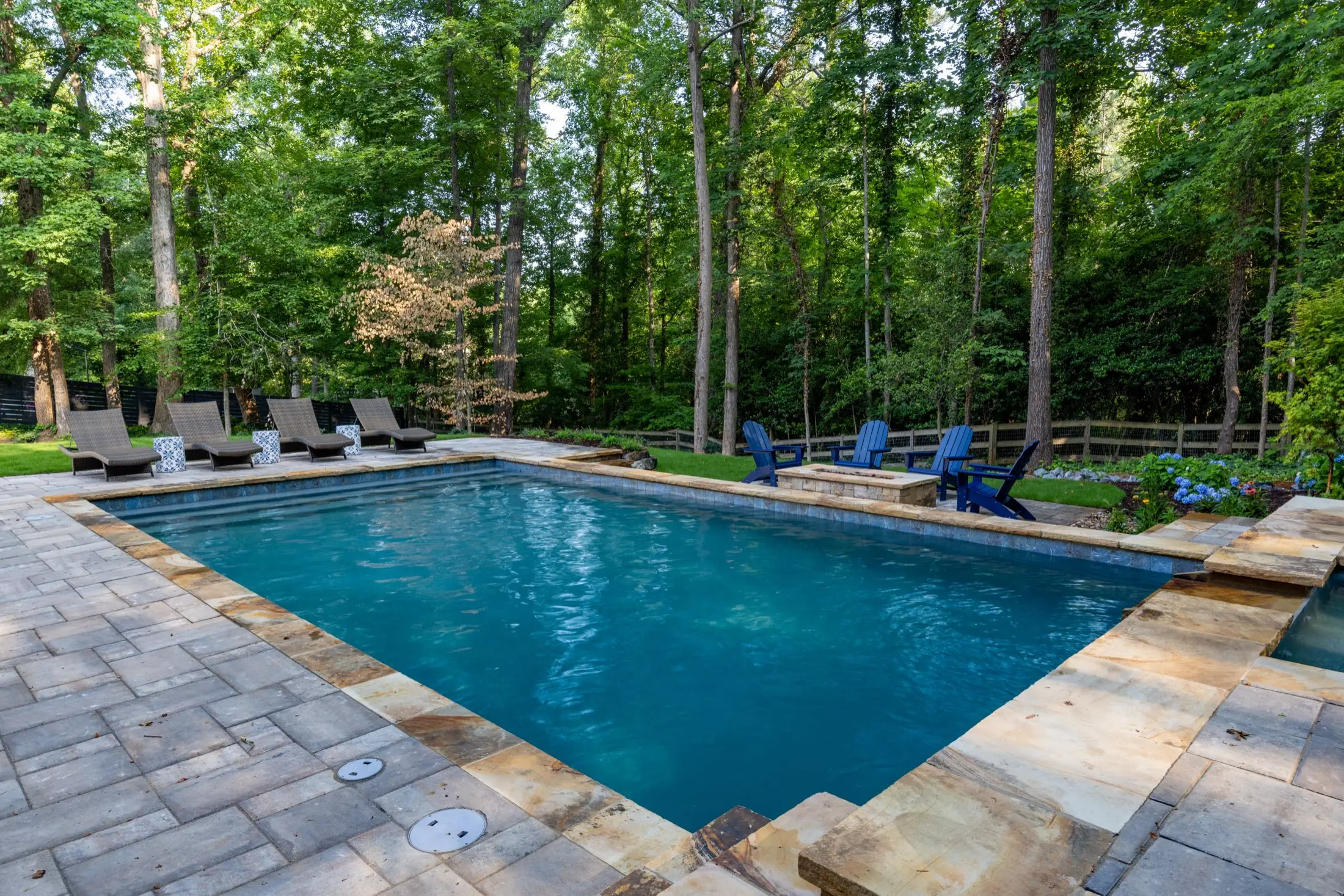
Wang · Dunwoody
What do pool owners wish they had known before they started.
The most common regrets are not about the pool itself. They are about the process that led up to it, and every one below was avoidable with the right questions upfront.
Building the pool first and the rest of the backyard later. A pool designed alone, with a kitchen or fire feature added afterward by a different contractor, often costs more in total and looks less intentional than a backyard designed as one environment from the start. If you know you want the whole environment eventually, say so at the first conversation, even if you plan to build it in phases.
Assuming the best-case timeline is the real timeline. A homeowner who plans a pool party for a specific date, based on the fastest possible version of every step, is set up for disappointment the moment anything, weather, permitting, a site surprise, runs even slightly long. Plan around the real range, not the optimistic one.
A change in who you're working with, after the contract. The person who ran the sales conversation is not always the person who shows up to build. Ask directly who stays involved from design through construction, and hold the answer to that standard once work starts.
Not asking what happens when a project changes mid-build. Sometimes a build reveals something nobody expected, a structural issue, a design that no longer fits once the site is opened up. Atlantis has taken over a project mid-build before: the Chadwell project in Roswell began with another contractor, was torn out and rebuilt from freeform-small into an elaborate linear modern design with a vanishing edge and pool house, and the relationship has continued more than ten years since. The lesson generalizes past any one builder: ask what a company does when something does not go as planned, not just what happens when everything goes right.
Who do you actually work with, from the first call to the final walkthrough.
At Atlantis, the same two people are involved throughout. Kelly Jennings measures your property herself at the free design site visit, brings back the custom design seven to ten days later, and stays through the design meetings and rework. Bruce Todd brings the construction and engineering read to the site and leads the build. Both are Genesis-trained designers, a credential almost no other firm in this market has even one of, let alone two. This is worth asking any builder directly, because the answer varies more than most buyers expect: some firms hand you off from a salesperson to a project manager you have never met, to a rotating set of subcontractors.
Continuity matters because the person who understood your site, your budget, and what you actually wanted the space to do is the same person accountable for the design decisions that follow. A design that gets handed off between people tends to lose the details that made it specific to your property in the first place.
What happens after you finish this guide.
The best next step, with Atlantis or with anyone on your shortlist, is a free design site visit, where a real read of your site turns everything in this guide into a specific design and a specific number for your backyard.
Questions buyers ask before hiring a custom pool builder.
How long does the whole process take, from first call to swimming?
Most projects run several months total. Design takes seven to ten days after the site visit, permitting and any HOA review often run in parallel, and construction itself takes twelve to fourteen weeks. Add design, contract, and approval time ahead of construction to estimate your real start-to-finish window.
Is the first site visit really free?
Yes. At Atlantis, Kelly runs the design site visit herself, measuring the property, reading elevations, and checking setbacks, at no cost. Nothing is handed over that day. The custom design and detailed pricing come at a follow-up design meeting seven to ten days later.
Why won't any builder give me a firm price upfront?
Because no two backyards cost the same to build. Site condition, structure and finish, how much outdoor living you add, and whether one team designs the whole environment together all move the number. A real price only exists once a builder has actually walked your property.
What should I ask a builder about what goes wrong?
Ask for a real example: a project where the site turned out harder than expected, and how it was handled. A builder with a real answer has done this before. A builder who deflects the question has not thought about it, or does not want to.
Is a 50 percent deposit before construction starts normal?
A payment schedule should track completed work, not outrun it. A deposit that covers early design and contract work is reasonable. A schedule that collects most of the money before meaningful construction begins shifts the risk onto you if something goes wrong partway through.
How do I check if a pool builder is actually licensed?
Every legitimate builder in Georgia holds a state contractor's license. Ask for the number and verify it against Georgia's public license lookup rather than taking the builder's word for it.
What does a Genesis credential actually mean, and how do I check it?
Genesis School of Design is an advanced pool design and construction education that goes beyond the state license requirement. If a builder claims it, verify the specific designation at the public registry, genesis.phta.org, rather than trusting a website claim. See the full credential breakdown at /studio/credentials.
Can I see a builder's past projects in person, not just photos?
You should be able to. A builder proud of its work will offer a reference list of real, finished projects and walk you through one, including projects finished years earlier so you can judge how they have held up. If a builder cannot produce this, ask why.
Do I need to pick a pool type or budget before I call?
No. Most homeowners start with a general sense of what they want and a rough budget range, not a fixed decision. The first conversation is a phone call about your goals and your property. Everything specific gets built from there, starting with a site visit.
Should I renovate my existing pool or start over?
It depends on the pool and the design you actually want. Sometimes renovation makes sense. Sometimes tearing out and rebuilding costs less in the long run than trying to force a new design onto a structure that will not support it. A design site visit is the only accurate way to know which applies to your project.
Request a complimentary site visit.
Nothing in this guide is a substitute for walking your own property. Atlantis starts with a phone conversation about your budget, your wants, and your lot, then a free design site visit where Kelly measures the site herself and a custom design comes together over the next seven to ten days.