
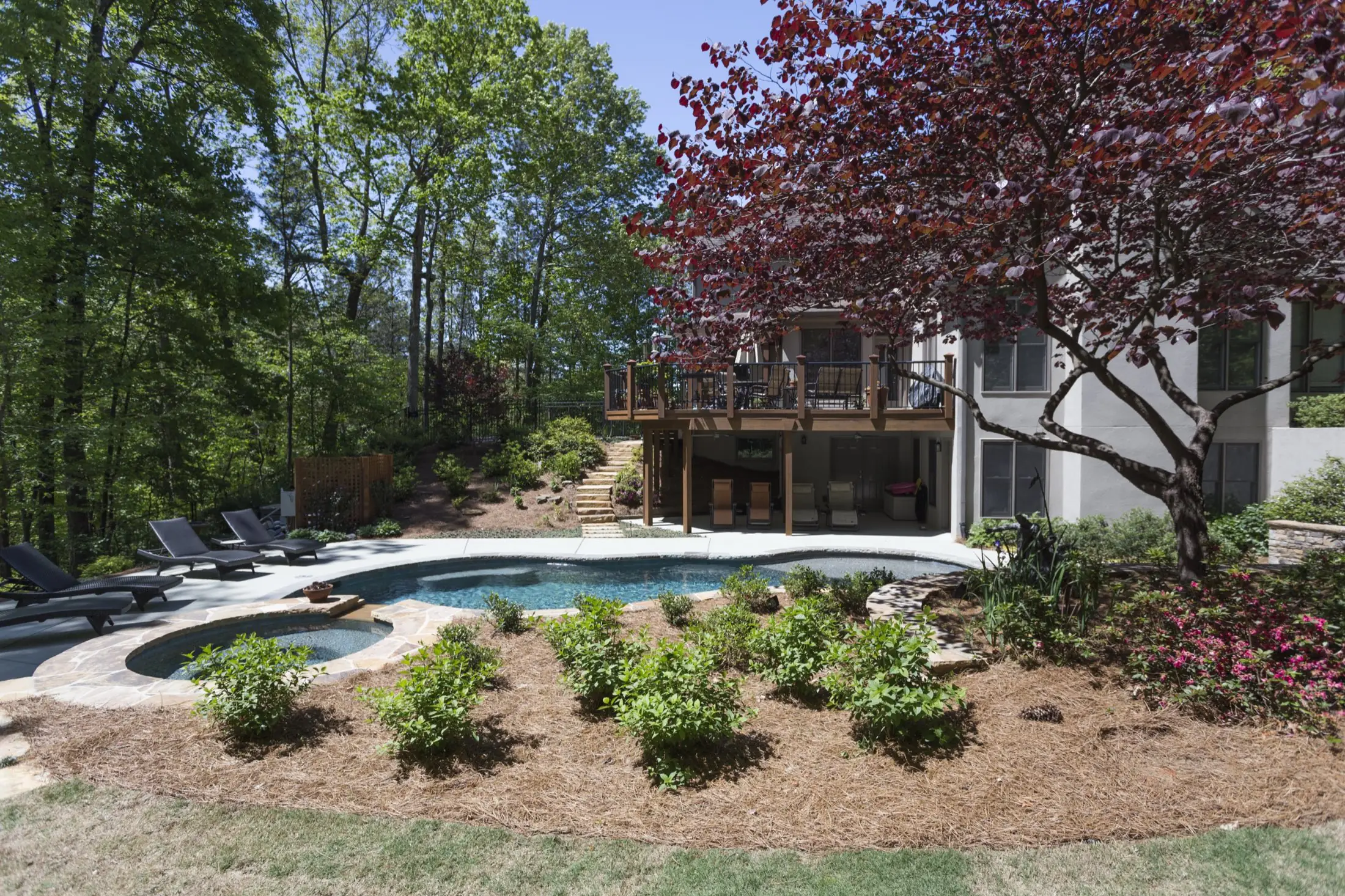
A pool shaped like the land it sits in.
A freeform natural pool uses curved, irregular edges and natural materials to look like it belongs in the landscape rather than sitting on top of it. It suits a wooded lot, mature trees worth keeping, and a homeowner who wants the water to feel discovered, not installed.
The Atlantis Studio
Starke · Johns Creek
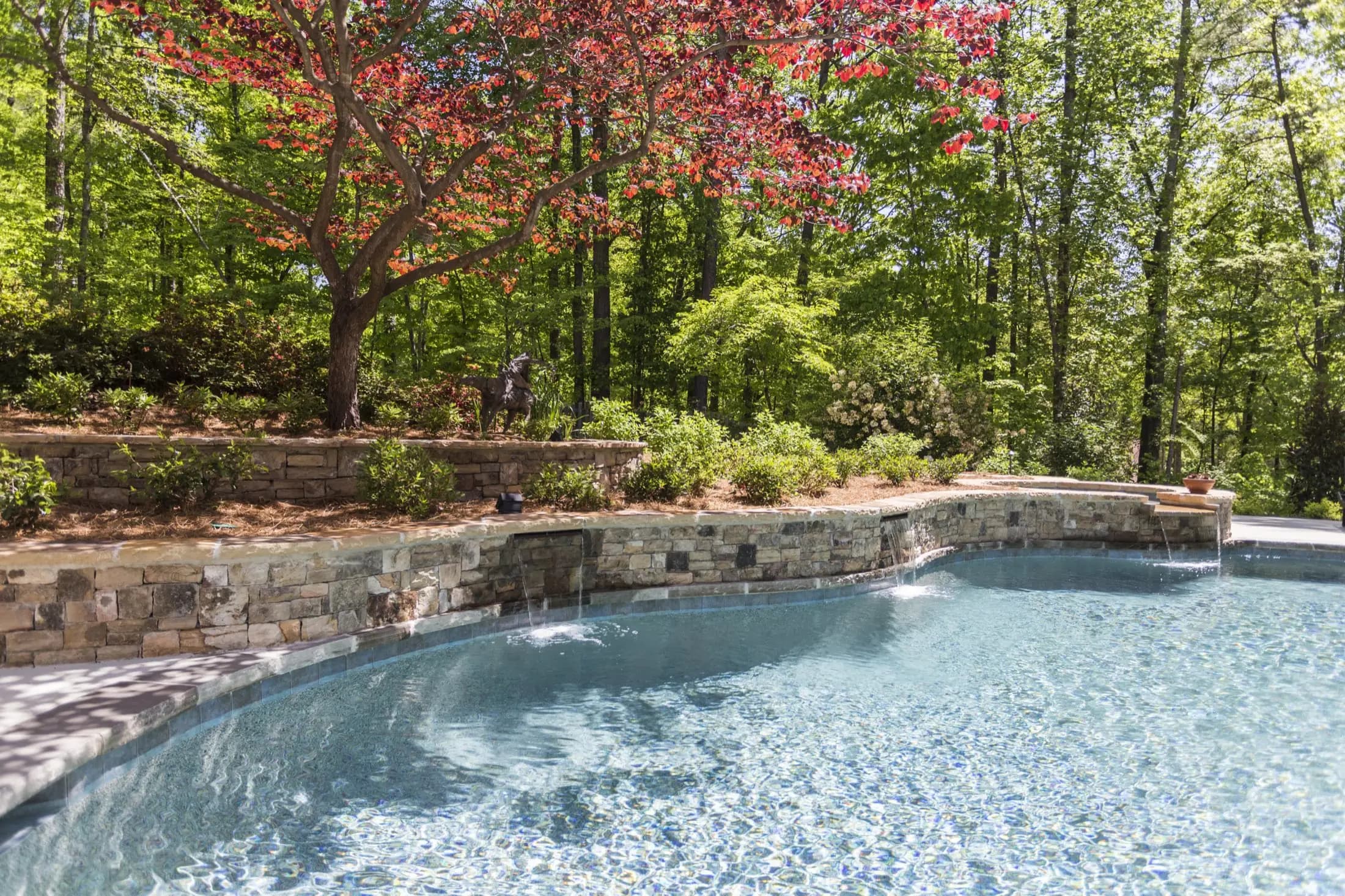
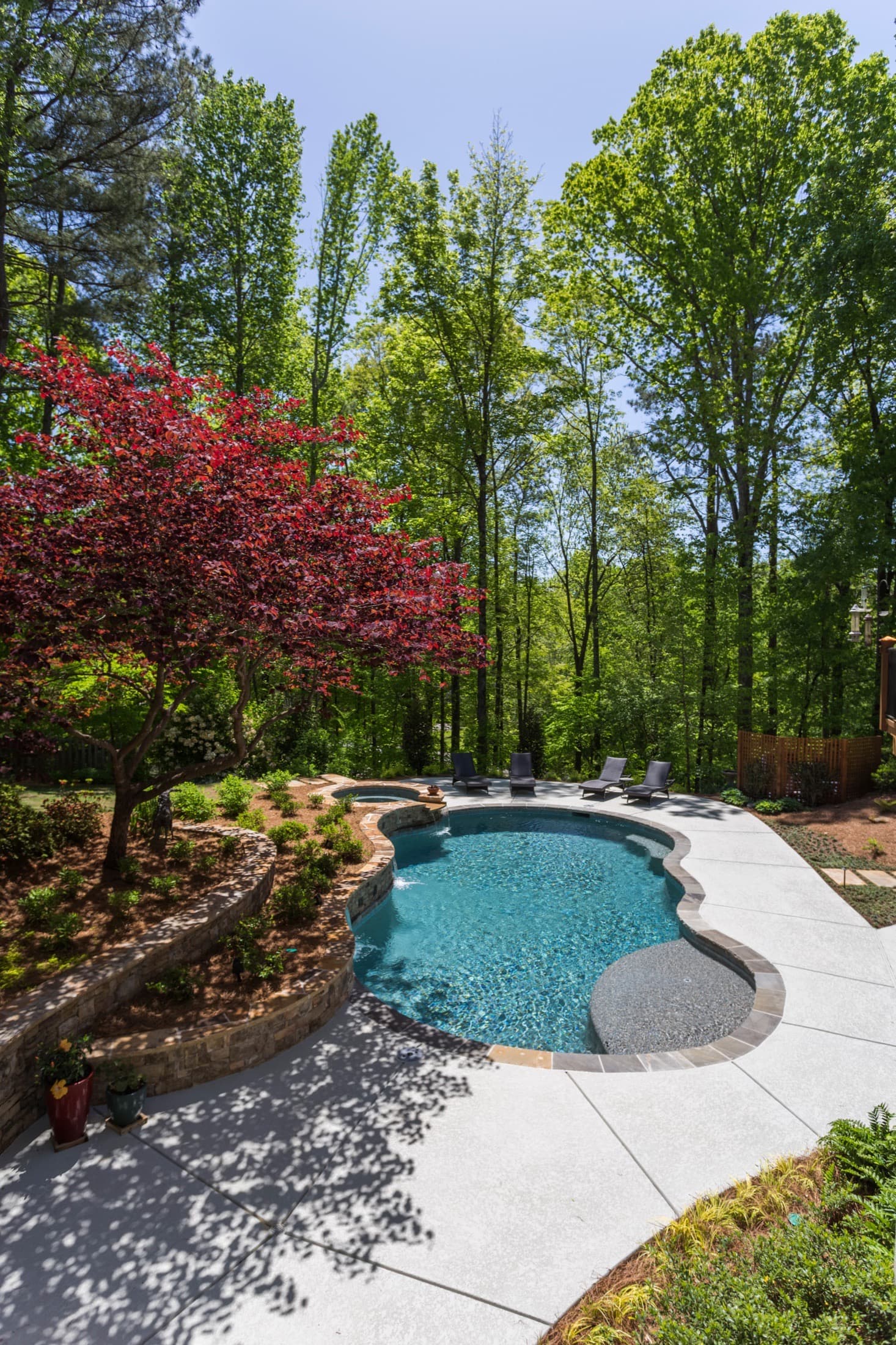
The Starke project in Johns Creek is the clearest example Atlantis has built: a freeform pool set in the woods, a red Japanese maple standing at the water's edge, the whole thing reading like it grew into that spot rather than being poured there. That's the standard every freeform natural design is measured against.
Who a freeform natural pool actually fits.
Freeform natural pools suit a wooded or irregular lot, mature trees worth keeping, and a preference for a softer, less architectural look: hardwoods worth preserving, a slope that resists a straight line anyway, an existing garden or stone wall the design should work around instead of erase. A homeowner who wants a crisp, contemporary look next to a modern house is better served by the linear modern type instead.
What a natural-shaped pool asks of your property.
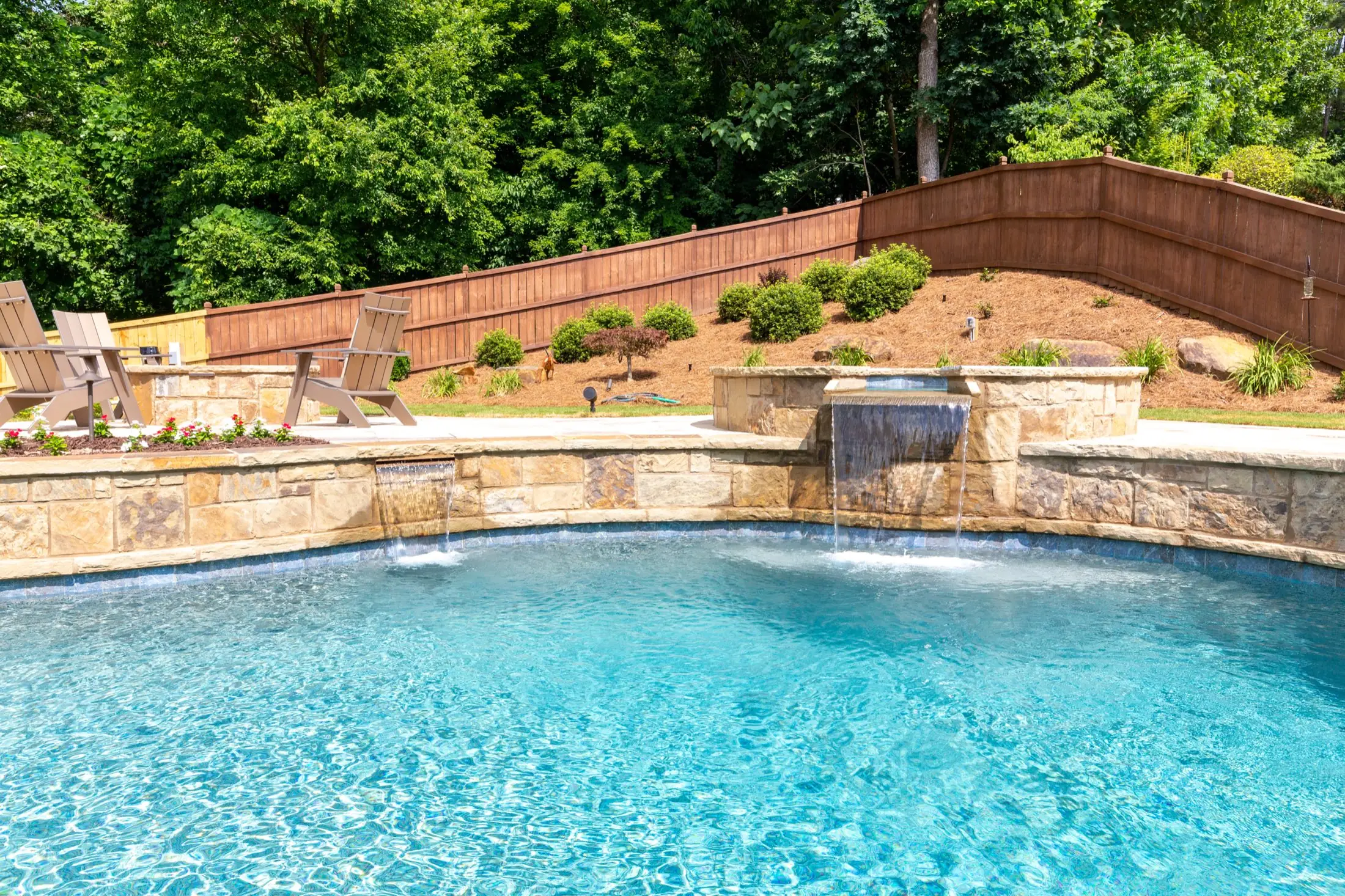
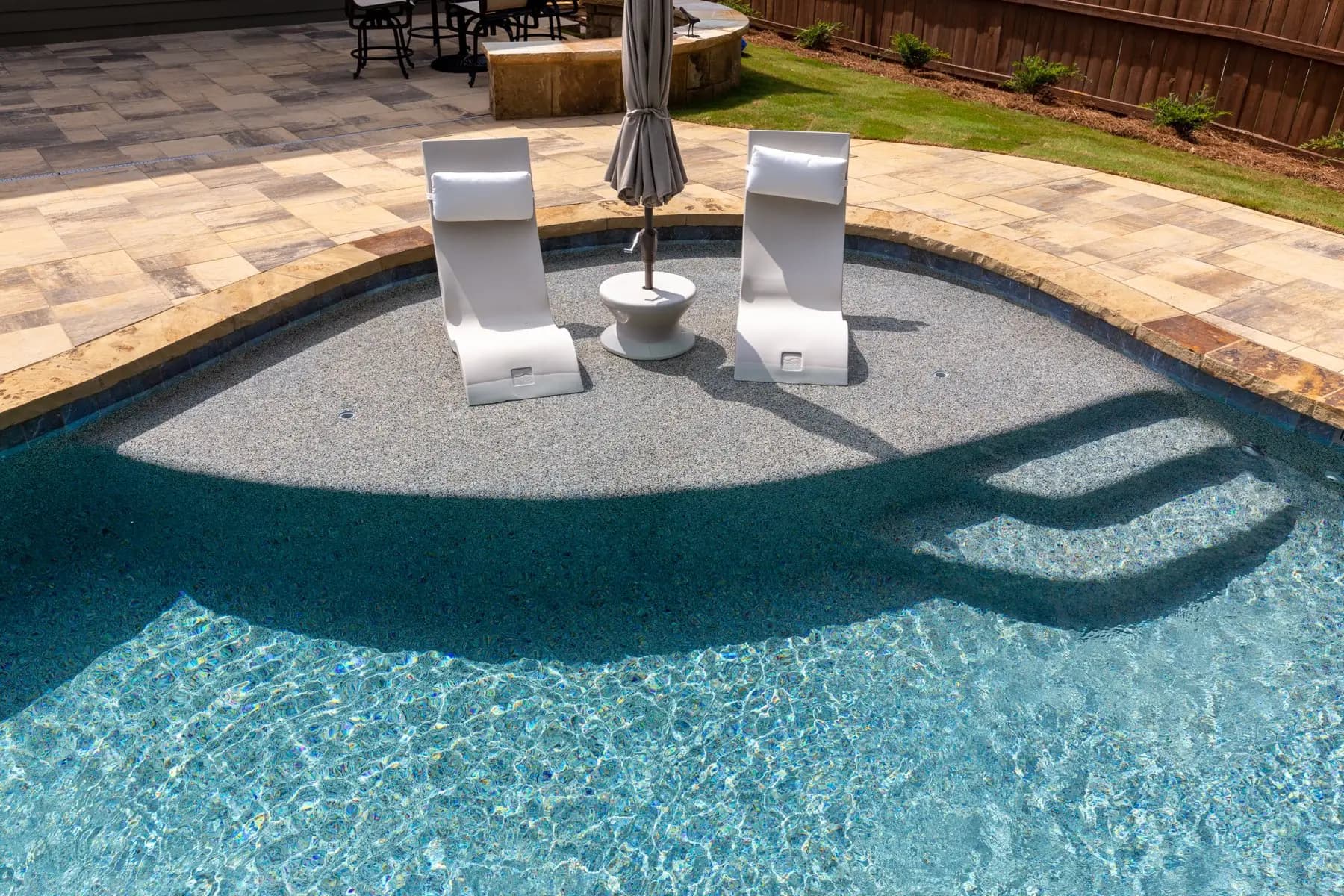
A freeform natural pool reads the site before drawing a single curve: tree canopies, existing grade, and sightlines from the house shape it more than a formal, geometric layout would. Every mature tree Kelly and Bruce want to keep sets a boundary the pool's edge has to respect, and the root protection zone around it matters as much as the shape of the water itself. Materials tend toward irregular, natural-finish stone for coping and decking, plantings brought close to the water's edge, and a pebble or quartz interior finish that reads more like a natural pond bottom than a bright architectural blue.
The real Atlantis freeform natural project.
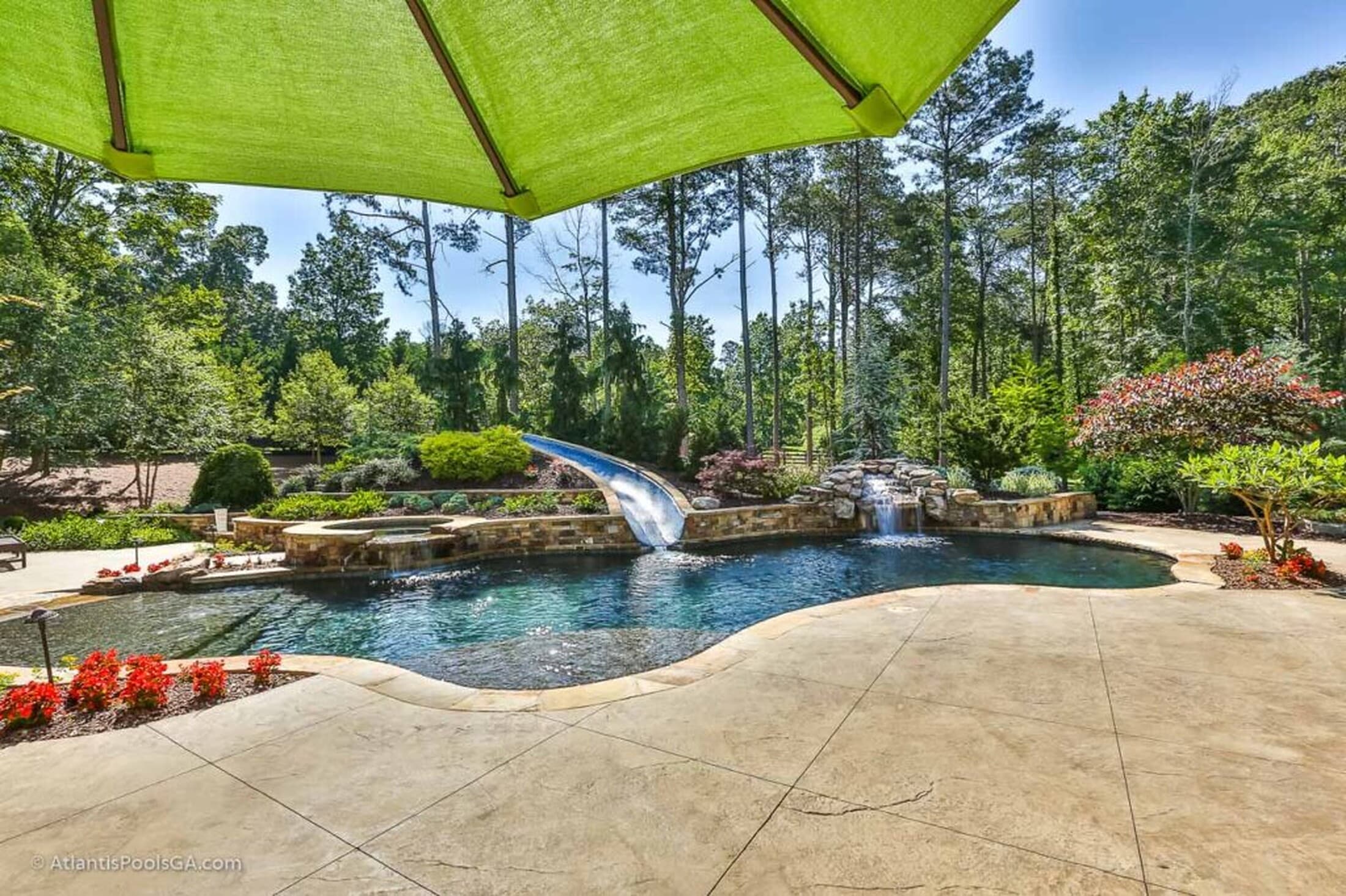
The Starke project in Johns Creek is Atlantis's verified freeform natural build: the reference point for what this type looks like when the site and the design work together instead of against each other.
The Starke Project in Johns Creek.
A freeform natural pool set in the woods, with a red Japanese maple standing near the water. The design works with the hardwood canopy already on the lot rather than clearing around it, so the finished pool reads as part of the existing landscape.
→ Read the full project: /work/starke
Questions buyers ask about freeform and natural pools.
What makes a pool "freeform natural" instead of just curved?
The curve is only the surface of it. A freeform natural design also responds to what's already on the lot, mature trees, existing grade, natural stone, and uses materials (irregular coping, a natural-toned interior finish) that support the look rather than fight it. A curved pool with a bright blue interior next to a formal patio isn't really freeform natural, it's just not rectangular.
Do I need a wooded lot for a freeform pool to make sense?
It helps, but it isn't required. What matters more is whether the site already has irregular character, mature trees, an uneven grade, existing stonework, that a straight-edged design would have to erase.
Does a freeform pool cost more than a linear pool?
Not inherently. Cost is driven more by size, depth, features, and site conditions (especially tree preservation and grade work) than by whether the shape is curved or straight.
See what this looks like on your lot.
A freeform natural pool starts with the same first step every Atlantis project does: a site visit, where Kelly walks the property and talks through which trees stay, what the grade allows, and what a pool shaped by this specific land could look like.