
Pebble, quartz or plaster. How to choose a pool finish.
Plaster is the smoothest and simplest finish. Quartz mixes colored aggregate into the plaster. Pebble exposes small stones, so it has the most texture. They differ in feel underfoot and in how the water looks. Care is similar for all three. Every pool we build gets a pebble finish.
Kelly Jennings, Designer & Project Manager, Atlantis Pools & Spas. Genesis School Associate. Certified Pool Builder. Multiple PHTA Design Awards. 22+ years.
Starke · Johns Creek
Is the finish part of the pool's structure.
No. The structure is the shotcrete shell, sprayed over steel and left to cure. The finish is the layer we apply over that cured shell, the surface you see through the water and touch with your feet. Choosing a finish changes how the pool looks and feels. It does not change how the shell is built or engineered.
We say this first because the two get mixed together in a lot of sales conversations. If you are comparing builders, ask about the shell and the finish as separate questions. Our construction page shows where the finish falls in the build, after the shell and before the decking. And if you are trying to understand what moves the price, the cost drivers guide treats structure and finish as one of the four things that move the number.
How does each finish feel underfoot.
Plaster is the smoothest. Quartz is close to it, with a slight grain from the colored aggregate. Pebble has the most texture because the small stones sit at the surface. How a pebble finish feels depends a lot on the size of the stones, and smaller stones feel smoother.
Plaster.
A troweled cement surface with nothing exposed. It feels smooth on hands and feet and is usually white or close to it.
Quartz.
Plaster with crushed, colored quartz mixed in. It still feels smooth, with a little more grain than plain plaster, and the color goes through the surface rather than sitting on it.
Pebble.
Small stones set in cement, with the top layer exposed. You can feel the stones, which some people like on steps and benches and others want to try first. This is the finish we put in every pool we build today, and it is worth feeling one before you commit to a color.
What changes the color of the water.
The finish color is only part of it. The same finish can look pale and bright in one backyard and deep blue in another, because the water also takes its color from how deep it is, how much light reaches it and what surrounds it. A small sample in your hand will always look different from a full pool.
Depth.
Shallow water over a tanning ledge or steps reads lighter. The deep end reads darker and richer, even with the same finish across the whole pool.
Light.
Full sun brightens the water. Shade, cloud and evening light deepen it. A lot of North Atlanta yards sit under mature trees, so a pool can look like two different colors between morning and late afternoon.
Surroundings.
Water reflects what is around it. Sky, tree canopy, the house and the decking all show up in the surface. A finish that looks right on a sample can read differently once it sits in your yard.
This is why a finish color is worth choosing with your own yard in mind, not from a sample alone.
How do pebble, quartz and plaster compare.
Side by side, the three differ most in texture and in how they carry color. Care is similar for all of them. We left out years of service and cost, because both depend on your water, your climate and your project.
| Factor | Plaster | Quartz | Pebble |
|---|---|---|---|
| Feel underfoot | The smoothest of the three. | Smooth, with a little more grain than plaster. | The most texture. Smaller stones feel smoother than larger ones. |
| Look in the water | One even color, usually white, so the water reads light. | Colored grains through the surface give it some depth. | Individual stones show, and the color changes as light moves. |
| Care | Balanced water and regular brushing. Marks show more easily on a plain, light surface. | Balanced water and regular brushing. The colored grains hide small marks a little better. | Balanced water and regular brushing. Texture and mixed stone color hide small marks the most. |
| Where we use it | Ask Kelly at your site visit. | Ask Kelly at your site visit. | Every pool we build today. |
Two questions, so Kelly knows where to start.
What care does each finish need.
The same habits protect all three: balanced water and regular brushing. How long any finish keeps its look depends on water chemistry, climate and care, which is why we do not put a number of years on it. The differences between finishes are mostly about what shows.
A plain, light plaster surface shows marks more easily. Quartz hides small marks a little better because of the colored grains. Pebble, with its texture and mixed stone color, hides them better still. None of that replaces keeping the water balanced.
When a pool is finished, Kelly or Bruce walks it with you and teaches every component. Our service and warranty page covers what happens after the pool is filled.
Which finish is on a real Atlantis pool.
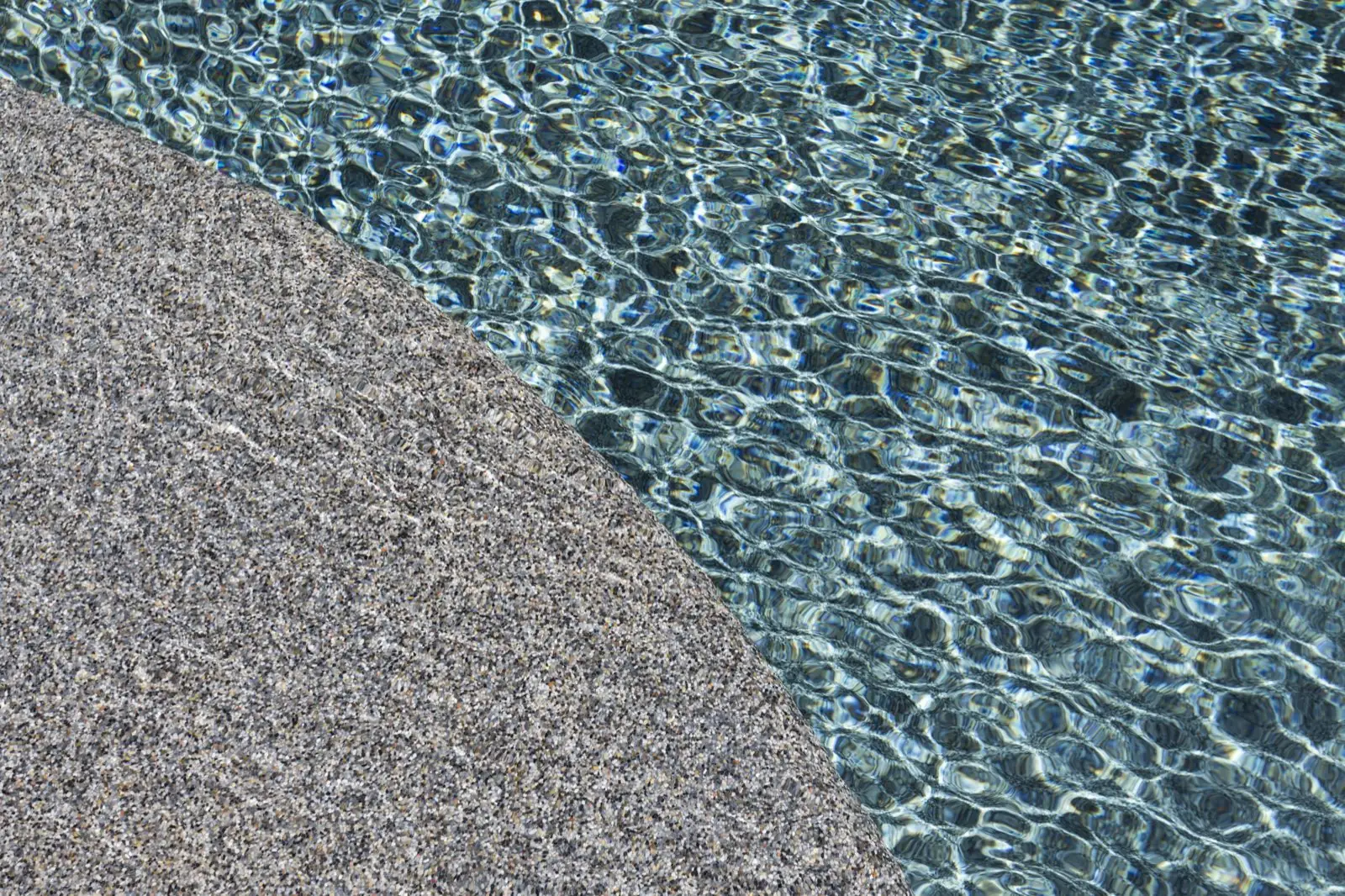
The close-up at the top of this page is the Starke pool in Johns Creek, where the finish meets moving water on a curved step. Every pool we build today gets a pebble finish, and the best way to judge one is to stand next to a finished pool and look down into it.
We keep a reference list of pools we have built, and Kelly will walk finished projects with you in person. You can also look through Batchelor in Roswell and Chadwell in Roswell to see how a finish reads across a whole pool, in sun and after dark.
Is a sample enough to choose from.
Samples help with color, as long as you remember that a small sample in your hand will look different under several feet of water. It helps to see both, a sample and a finished pool, before you decide.
What does the written warranty cover on the finish.
Your contract spells out what the warranty covers, and that written document is the one to rely on.
If any builder names a finish brand, ask whether the manufacturer's warranty is separate from the builder's and who handles a claim. Then get both in writing.
What if I am resurfacing a pool I already have.
The finish is the surface, so it is the layer a resurface replaces. If the shell underneath is sound and the layout still works for your family, a new finish is a renovation, and the choices on this page apply to you the same way they apply to a new build.
Resurfacing is often a natural time to change finish type or color. Before we talk finishes on an existing pool, Kelly looks at the shell, the equipment and the layout in person, because a fresh surface on a shell with real problems does not fix those problems. Our renovation or new build guide walks through how to tell, and our renovation work shows what that looks like in practice.
Frequently asked questions.
Which pool finish is the smoothest?
Plaster. It is a single troweled surface with nothing exposed. Quartz adds colored grains to the plaster and feels slightly more textured. Pebble exposes small stones and has the most texture of the three.
Does the finish color change the color of the water?
Yes, along with three other things: how deep the water is, how much sun or shade it gets, and what surrounds it. A light finish in shallow water in full sun reads very differently from a dark finish in deep water under trees.
Is a pebble finish hard on bare feet?
It has more texture than plaster or quartz, and how it feels depends on the size of the stones. The fair way to judge it is with your own hand or feet on a sample or a finished pool, not from a photo.
How long does a pool finish last?
It depends on water chemistry, climate and how the pool is cared for, and that is true of every finish type. We do not quote a number of years for that reason. What the written warranty covers is spelled out in your contract.
Does the finish change how the pool is built?
No. The finish goes on after the shotcrete shell has cured. The shell, the steel inside it and the engineering underneath are the same whichever finish you choose. The finish is the surface you see and touch.
Can I see a finish on a real pool before I choose?
Yes. We keep a reference list of pools we have built, and Kelly will walk finished projects with you in person. Seeing a finish under real water in daylight tells you more than any photo.
A finish is easier to choose standing beside the water.
The site visit is free. Kelly measures the yard, reads the elevations and checks the setbacks, then the custom design comes back in seven to ten days. If you want to see a finish in real water first, ask her about visiting a pool we have built.